






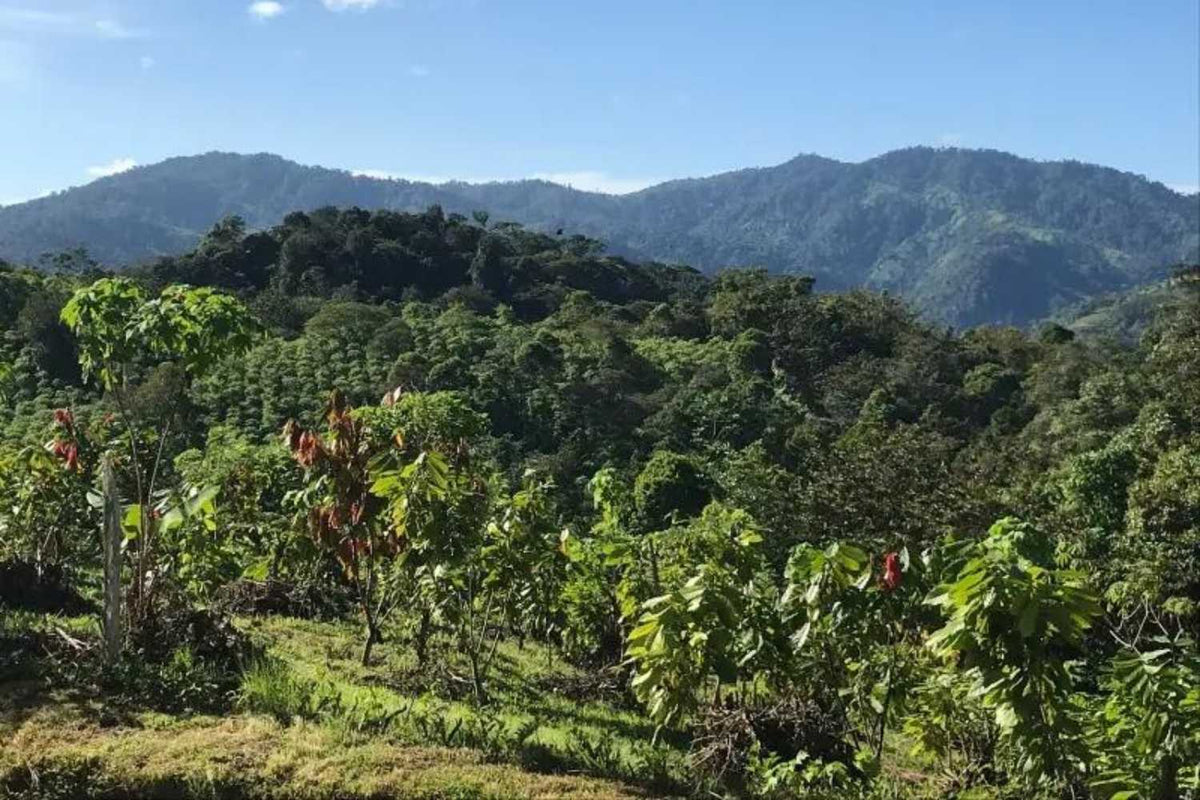
Lush cocoa plants in rolling countryside with wooded mountains in the background, beneath a clear blue sky.
Cocoa carries its origin within it. Soil, climate and altitude shape it, as do its genetic basis and post-harvest processing. Anyone tasting fine flavour cocoa can experience this interplay: in fruity, floral, nutty or spicy notes and in the fine balance of acidity and bitterness.
Terroir shapes the character of cocoa
Terroir describes the influences that shape the character of a cocoa. These include soil, altitude and microclimate, as well as local processing. But it all begins with the cocoa’s genetic basis.
Certain cocoa varieties naturally have the potential for particularly delicate and complex aromatic profiles. These include cocoa varieties from the Criollo group and selected Trinitario varieties. Climate, soil and processing can shape these qualities and bring them to the fore. The genetic conditions provide the foundation for this.
Genetics as the origin of aromatic diversity
The genetic characteristics of a cocoa help determine which aroma precursors are present in the beans and in the pulp. During later processing, these develop into the characteristic flavour notes.
This is how fine flavour cocoa can taste fruity and floral, nutty or spicy. Which nuances emerge, and how pronounced they are, results from the interaction of variety, origin and processing.
Climate, soil and altitude shape character
On this genetic foundation, the classic terroir factors unfold their effect. Cocoa grows in regions close to the equator, both on the plains and at altitudes of up to around 700 metres. A consistently warm climate provides the sensitive cocoa tree with favourable conditions. Longer cool periods can affect growth, flowering and fruit set, but can also influence the sugar content of the pulp and its aromatic notes. Both are important precursors to the flavour of cocoa beans.
Warmth, moisture and light influence the development of the fruits. The soil supplies the plants with nutrients, while altitude helps shape ripening and growing conditions, among other things. This gives rise to regional flavour profiles with a character all their own. Even the ambient temperature has an effect. Among other things, it influences the cocoa butter.
Fermentation and drying shape the aroma
The knowledge and experience of local people also shape the cocoa. In particular, fermentation and drying determine how the aroma precursors formed in the bean continue to develop.
During fermentation, enzymatic processes begin. Duration, method and temperature influence the later aromatic profile and thus, among other things, fruitiness, acidity, bitterness and nutty notes. In the subsequent drying process, the cocoa seed becomes a tradable product that can be stored. Drying stabilises the beans and creates the basis for further processing.
Nature and craftsmanship are directly intertwined here.
Fine flavour cocoa shows flavour diversity
With up to 400 aromas, cocoa offers an exceptionally broad spectrum of flavours. Which of these become perceptible in the finished product depends primarily on post-harvest handling and processing.
Cocoa from Peru can surprise with lively citrus notes. Venezuelan Criollo can show nutty nuances, cocoa from Ecuador pronounced floral notes and cocoa from Trinidad spicy notes. Each origin brings different conditions and therefore its own expression in flavour.
Taste terroir mindfully
Origin becomes especially clear when chocolate is tasted with attention. To do this, enjoy the chocolate at room temperature and let a small piece melt slowly in your mouth. As the texture changes, the aromas gradually emerge. Perception through the nose is part of the experience too and makes fine differences more noticeable.
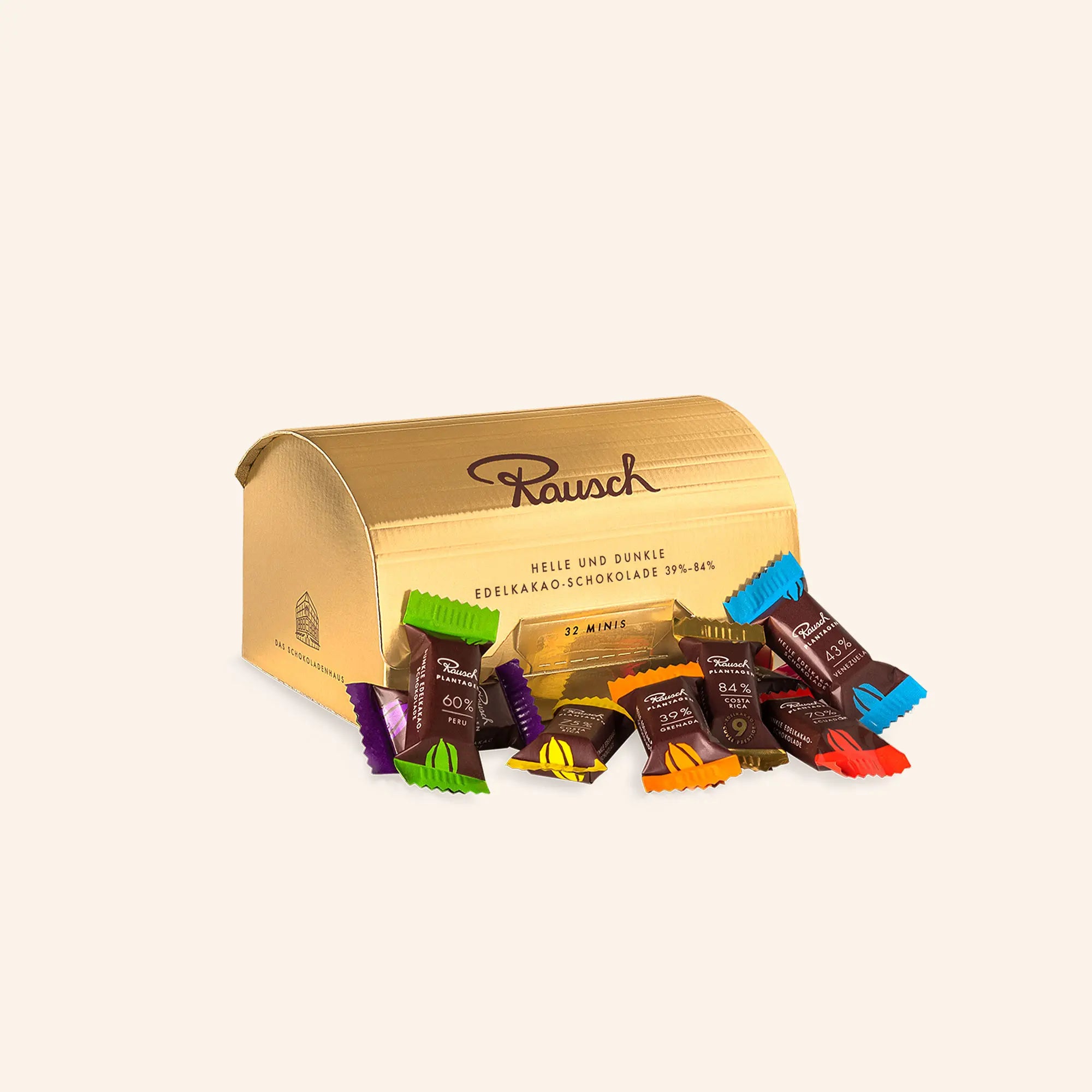
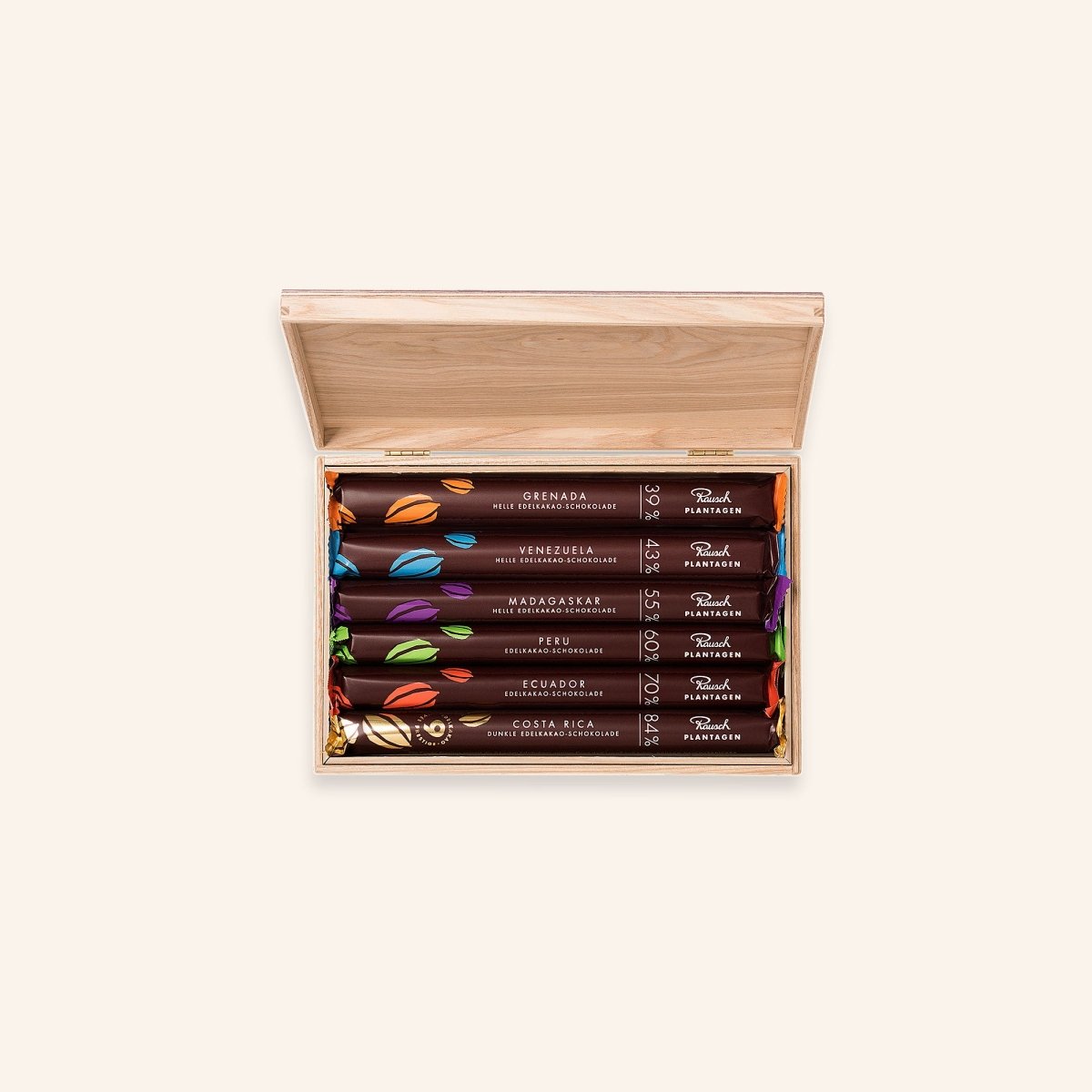
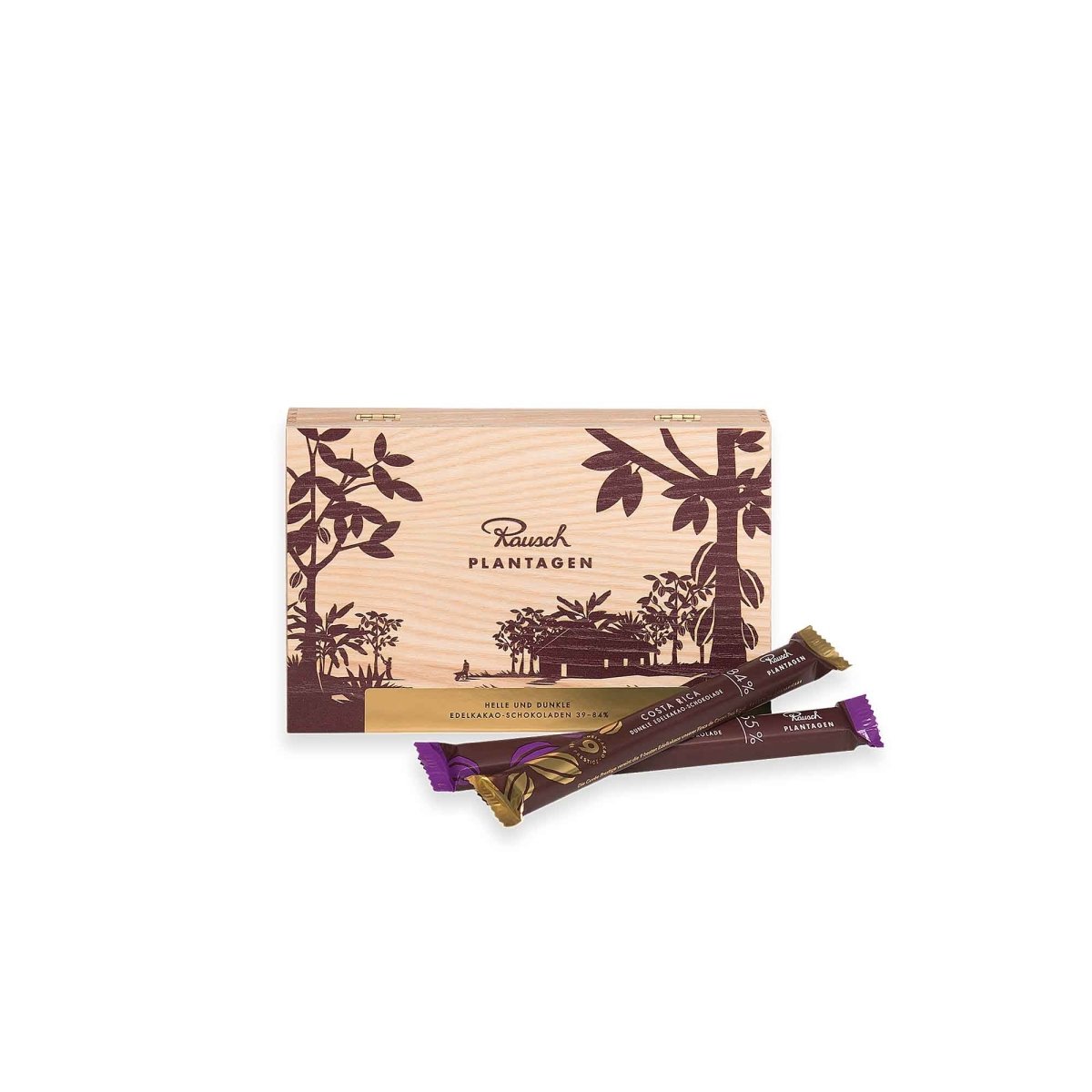
The single-origin chocolates from Rausch make different origins directly comparable. Fruity, floral, nutty or spicy nuances show how differently cocoa can taste when variety, origin and processing work together.